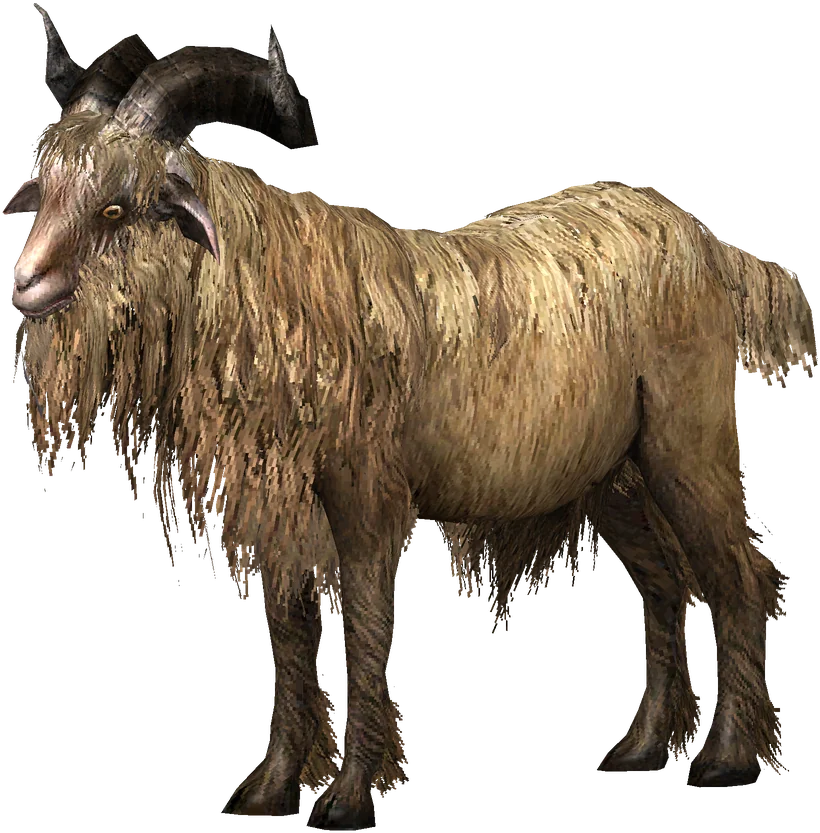
Goats are about as peaceful as Skyrim’s wildlife gets. You’ll find them penned on village farms and clambering around the high crags, where they shrug off the cold with a 50% resistance to frost. They are low-level animals (levels 1–6) with just 22 health, so they are mostly a source of hide and meat rather than a challenge. Mind whose goat it is, though: a farm goat belongs to someone.
Variants
- Wild goat – roams the mountains and wilderness. No collar.
- Domestic goat – lives on farms and wears a collar with a bell. Killing one counts as a crime and earns a 5-gold bounty, the same as a dog or a chicken.
The only other animal in Skyrim that comes in belled and unbelled versions like this is the mammoth.
Where to find them
Wild goats prefer mountainous country anywhere in the province, and the climb to High Hrothgar on the Throat of the World is a good place to see them. Tame goats live on village farms, where they count as the farmer’s property.
On the Seven Thousand Steps, goats sometimes walk ahead of you up the path. That makes them handy scouts: wolves and trolls waiting along the trail tend to go for the goat first, giving away their position.
Notes
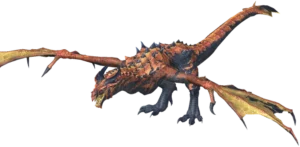
- Goats only turn aggressive when a spriggan enthralls them or when you cast Fury, Frenzy or Mayhem on them. Even then their hits barely tickle. Very rarely, a goat will take a run at a landed dragon.
- Two goats have names. Gleda is the prized goat that Ennis accuses you of stealing during A Night to Remember; the other is Lucky.
- With Hearthfire installed, goats also drop Goat Horns – which, oddly, look nothing like the horns on the animal’s head.
- Chase a goat into water and it won’t swim: it simply plods along the bottom.
- Now and then a goat is found carrying a precious gem.
- Goat Hide is tanning material, and Leg of Goat is the base for the Leg of Goat Roast.